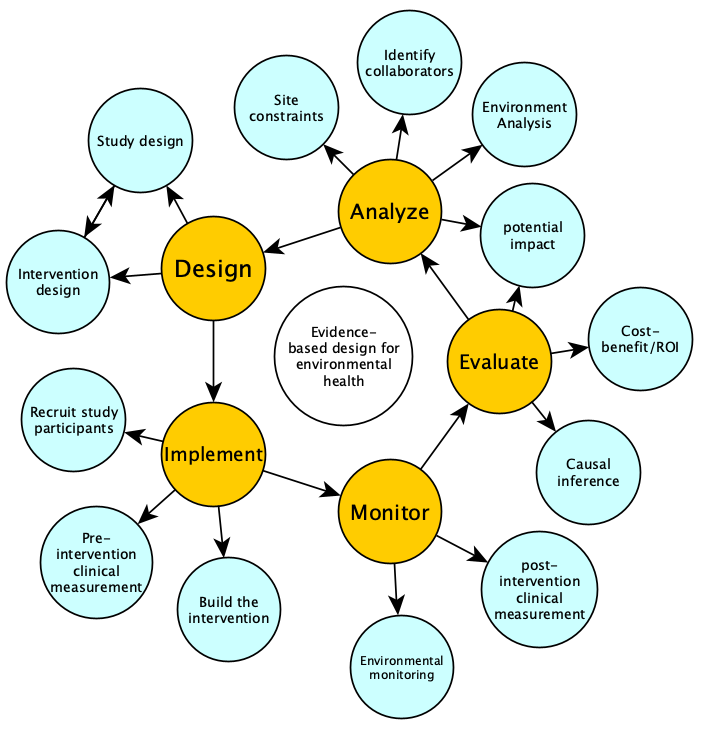
Texas Trees Foundation directed a study for redesign of a corridor to improve pedestrian health in the Southwestern Medical District in Dallas, Texas. The streetscape intervention which considered modifications to traffic flow and a massive tree planting initiative. The Hyphae Design Laboratory was selected to integrate the design and intervention process within the evidence-based design framework to monitor health-improving interventions, including setting up the area as a living laboratory for sustainable design.
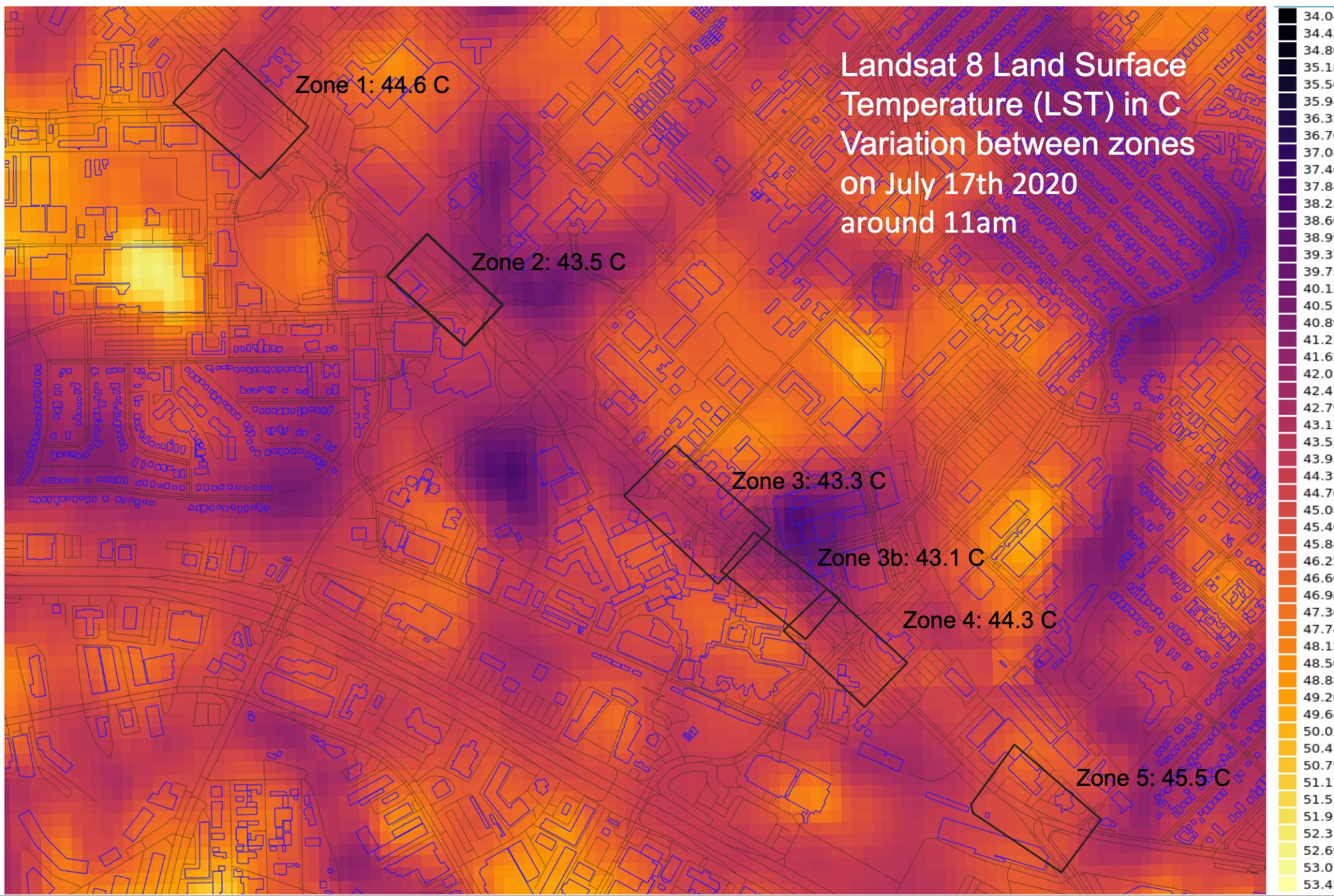
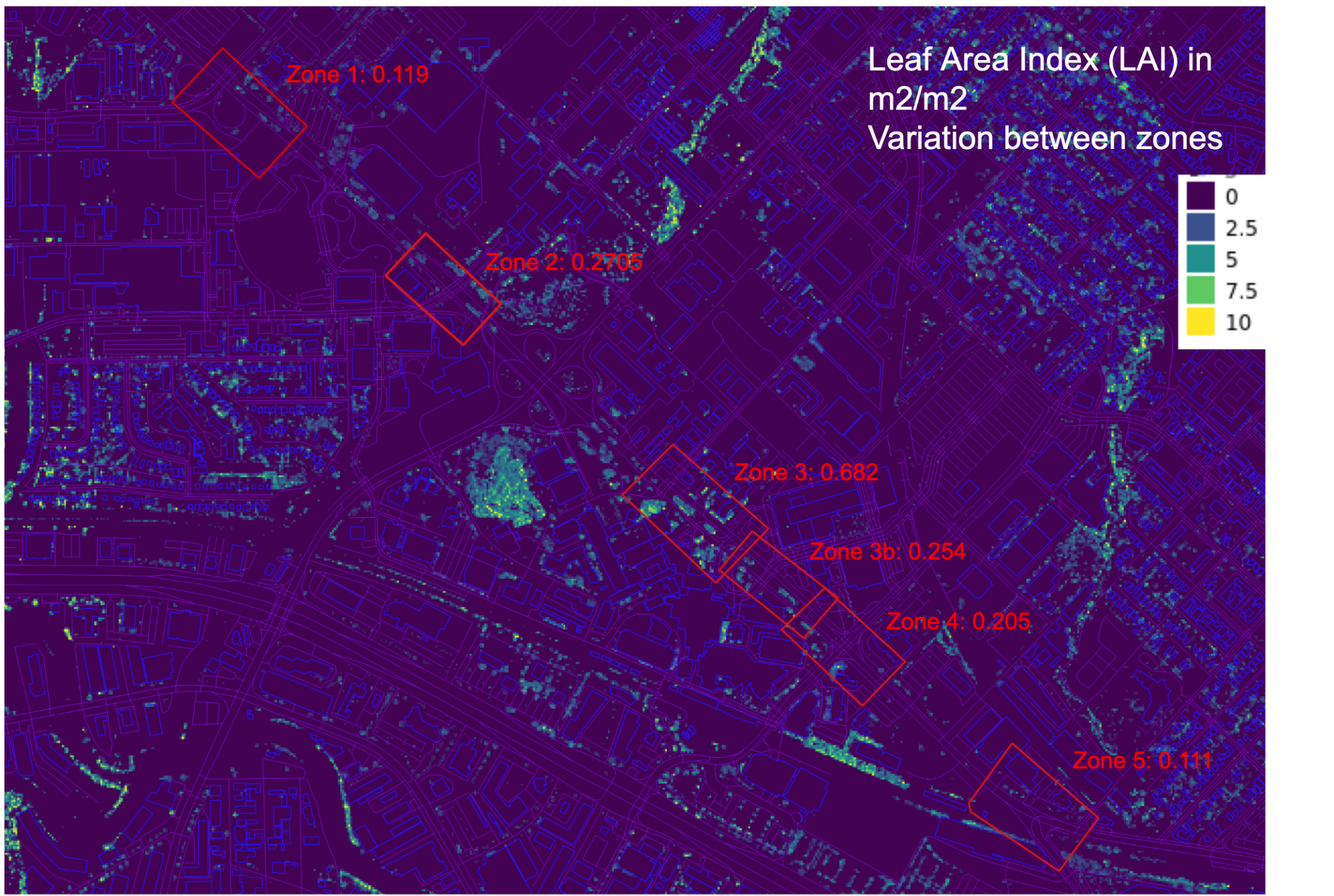
We conducted simulations on thermal comfort across the whole corridor using a model of the existing conditions. We then simulated many iterative intervention scenarios in a representative section of the corridor, and several designs for the park at Innwood to test various design rubrics for efficacy. The results of these iterations produced several key findings:
The Southwestern Medical District’s Green Spine Streetscape and Park intervention has the potential to become a national model of evidence-based design, revealing how targeted landscape strategies can improve both environmental conditions and public health. Through a rigorous process of data-gathering, simulation, and on-site monitoring, this project has already demonstrated how carefully placed large-canopy trees, vegetated buffers, and strategic landscape configurations can substantially reduce thermal stress while potentially mitigating traffic-related air pollution. Early findings underscore the outsized influence of mature canopy trees on lowering mean radiant temperature, the importance of thoughtful species selection for air quality and biodiversity benefits, and the potential of carefully placed vegetation in improving pedestrian and cyclist thermal comfort. When integrated into a cohesive framework for collaboration by connecting local stakeholders, designers, engineers, planners, and researchers, these insights can guide decision-making at every stage of design and implementation.
Texas Trees Foundation directed a study for redesign of a corridor to improve pedestrian health in the Southwestern Medical District in Dallas, Texas. The streetscape intervention which considered modifications to traffic flow and a massive tree planting initiative. The Hyphae Design Laboratory was selected to integrate the design and intervention process within the evidence-based design framework to monitor health-improving interventions, including setting up the area as a living laboratory for sustainable design.
We conducted simulations on thermal comfort across the whole corridor using a model of the existing conditions. We then simulated many iterative intervention scenarios in a representative section of the corridor, and several designs for the park at Innwood to test various design rubrics for efficacy. The results of these iterations produced several key findings:
The Southwestern Medical District’s Green Spine Streetscape and Park intervention has the potential to become a national model of evidence-based design, revealing how targeted landscape strategies can improve both environmental conditions and public health. Through a rigorous process of data-gathering, simulation, and on-site monitoring, this project has already demonstrated how carefully placed large-canopy trees, vegetated buffers, and strategic landscape configurations can substantially reduce thermal stress while potentially mitigating traffic-related air pollution. Early findings underscore the outsized influence of mature canopy trees on lowering mean radiant temperature, the importance of thoughtful species selection for air quality and biodiversity benefits, and the potential of carefully placed vegetation in improving pedestrian and cyclist thermal comfort. When integrated into a cohesive framework for collaboration by connecting local stakeholders, designers, engineers, planners, and researchers, these insights can guide decision-making at every stage of design and implementation.

Texas Trees Foundation directed a study for redesign of a corridor to improve pedestrian health in the Southwestern Medical District in Dallas, Texas. The streetscape intervention which considered modifications to traffic flow and a massive tree planting initiative. The Hyphae Design Laboratory was selected to integrate the design and intervention process within the evidence-based design framework to monitor health-improving interventions, including setting up the area as a living laboratory for sustainable design.
We conducted simulations on thermal comfort across the whole corridor using a model of the existing conditions. We then simulated many iterative intervention scenarios in a representative section of the corridor, and several designs for the park at Innwood to test various design rubrics for efficacy. The results of these iterations produced several key findings:
The Southwestern Medical District’s Green Spine Streetscape and Park intervention has the potential to become a national model of evidence-based design, revealing how targeted landscape strategies can improve both environmental conditions and public health. Through a rigorous process of data-gathering, simulation, and on-site monitoring, this project has already demonstrated how carefully placed large-canopy trees, vegetated buffers, and strategic landscape configurations can substantially reduce thermal stress while potentially mitigating traffic-related air pollution. Early findings underscore the outsized influence of mature canopy trees on lowering mean radiant temperature, the importance of thoughtful species selection for air quality and biodiversity benefits, and the potential of carefully placed vegetation in improving pedestrian and cyclist thermal comfort. When integrated into a cohesive framework for collaboration by connecting local stakeholders, designers, engineers, planners, and researchers, these insights can guide decision-making at every stage of design and implementation.

